lunes, 20 de noviembre de 2017

Portal 5: What is his/her house like?


Portal 5: What is his/her house like? Make a collage with pictures of the professional's place work (use your imagination). You must include a description of each picture using sentences in simple present and modal verbs. 


*His house his very big, outside of it it.


* it has a garage, besides,


* the house a big yard with many plants,


also, it hass a beautiful living room, so


* you need to go upstairs to see the bedrooms , aditionally.


* it has a big and clean library 


*and , the kitchen has a long bar


domingo, 19 de noviembre de 2017

Portal 4: Activities she/he likes and dislikes


Portal 4: Activities she/he likes and dislikes: Make a collage with pictures that describe the activities she/he likes and dislikes to do in her/his professional field. You must include a description of each picture through a paragraph.


·         He likes to teach.


·         He likes to read


·         He likes playing the guitar


·         He likes to enjoy the beach and the sun with his family


·         He does not like to go to quinceanera parties


·         he does not like olives


viernes, 10 de noviembre de 2017

Portal 3: His/her daily routine


 Portal 3: His/her daily routine: Make a collage with pictures that describe his/her daily routine. You must include a description of each action through a short paragraph by using Present Simple Tense and Phrasal Verbs (where they are possible). 


I always get up at 5:00 in the morning.


Often breakfast at 5:30 in the morning


I'm going in my car for work at 6:00


I usually start the class at 7:00


Always lunch at noon.


I finish teaching at 3:00 in the afternoon


I often go with my children to the park


Sometimes I go to the movies at night with my family


Before dinner prepare the class for the next day


I usually have dinner with my family around 7:00 in the afternoon.


I never go to bed before 8 o'clock.
I always fall asleep at 9:40


Connectors:
Ricardo speaks fluent English and is studying German now
Ricardo's wife, he's going to cook spaghetti tonight because he loves pasta.
Ricardo has a crooked ankle, however, he will go for a walk.
Ricardo and his wife invite their friends to celebrate their anniversary.

Modal verbs:

Well, the class has finished. You Might go home.
The kids haven’t to bring alcoholic drinks.
You must do your homework

Portal 2: Personal Information


Portal 2:  Personal Information: Make a collage with pictures to introduce the professional by mentioning personal information like: Full name, age, nationality, birthplace and occupation. 


RICARDO JOSE COTES MEJIA

Full name: Ricardo Jose Cotes Mejia.

Age: Thirty-five years

Nationality: Colombian.

Birthplace: Valledupar-Cesar, Colombia.

Occupation: English graduate


Ricardo is an excellent teacher, he could finish hi master this year.
Ricardo will be proficient in the teaching with his future students
Ricardo was born in Colombia, but his parents are Americans
Ricardo is a very busy man but he is very organized with his time. You should manage your schedule properly.
Ricardo must have patience and joy in his new job.

Portal 1: Physical Description


Portal 1: Physical description: Use the verbs “to be” and “to have” to describe his/her physical appearance according to the profession.   


Physical description of the teacher:

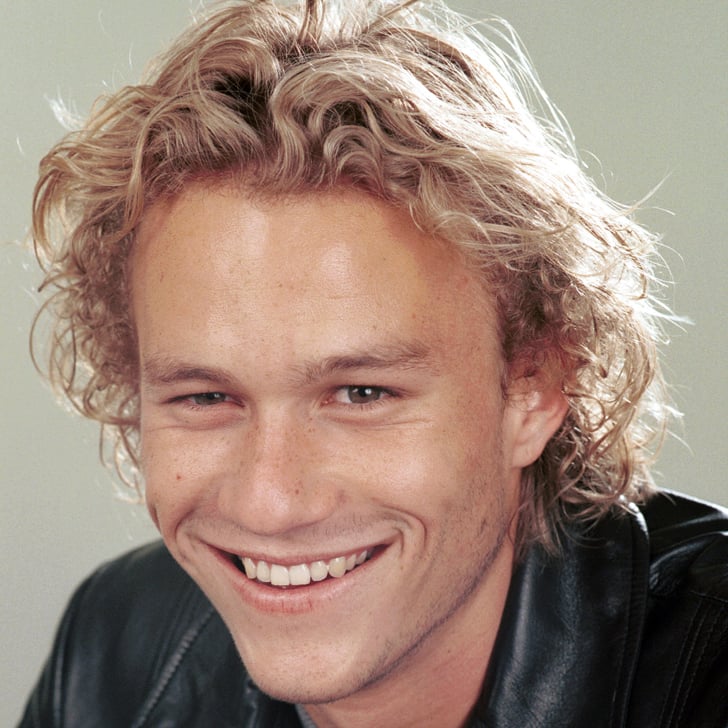
He is the teacher Ricardo, he has wavy blond hair he is tall, handsome. He has brown eyes has a mustache is skinny. He is well dressed and has a very elegant tie that is attractive.

Connectors:
  • Ricardo won the exam to be his English teacher, he will visit the other courses, he will also be a primary teacher.
  • Ricardo is happy to be his teacher.
  • Right at this moment Ricardo will be with you, then he will run fast to get to the primary.
  • Ricardo has a new project for the school, however the director does not want to know what it is.
  • Ricardo studied English literature, so he has read almost all writers in English.


Compound verbs:
  • Ricardo can speak five languages.
  • With Ricardo they can work late at school if they do not need it.
  • Ricardo and his assistant can help you.


Note: in this description the verbs used in "to be" and "to have" are:
He is
He has
Apart to describe our physical appearance or that of another person we need to learn the necessary vocabulary that would be: hair color and type of hair, whether it is tall or strong, your clothes and if it is attractive...

The connectors: the connectors are also known as textual or discursive connectors, markers or speech operators. The connectors belong more properly to a discursive or textual class. They guide the way in which the sentence or the sentence fragment, have to be interpreted in relation to the preceding context or to the inferences that are obtained from it.

In another form, they establish relationships of meaning between the phrases that unite. These markers or connectors offer the reader clues to follow the meaning of the text, linking in different ways the statements that compose it. Most discursive connectors are adverbs, prepositions, coordinating or subordinating conjunctions, interjections or more complex segments.

Compound verbs: Modal verbs are auxiliary verbs that can not function as a main verb, unlike the auxiliary verbs "be", "do" and "have" that can function as a main verb.
Modal verbs express modality, ability, possibility, need or other condition. We use them for the future and the conditional.

As complementary verbs that are, modal verbs do not work without another verb. This other verb always goes after the modal verb and is in the base form (the infinitive without "to"). Modal verbs are not conjugated and do not have time.